
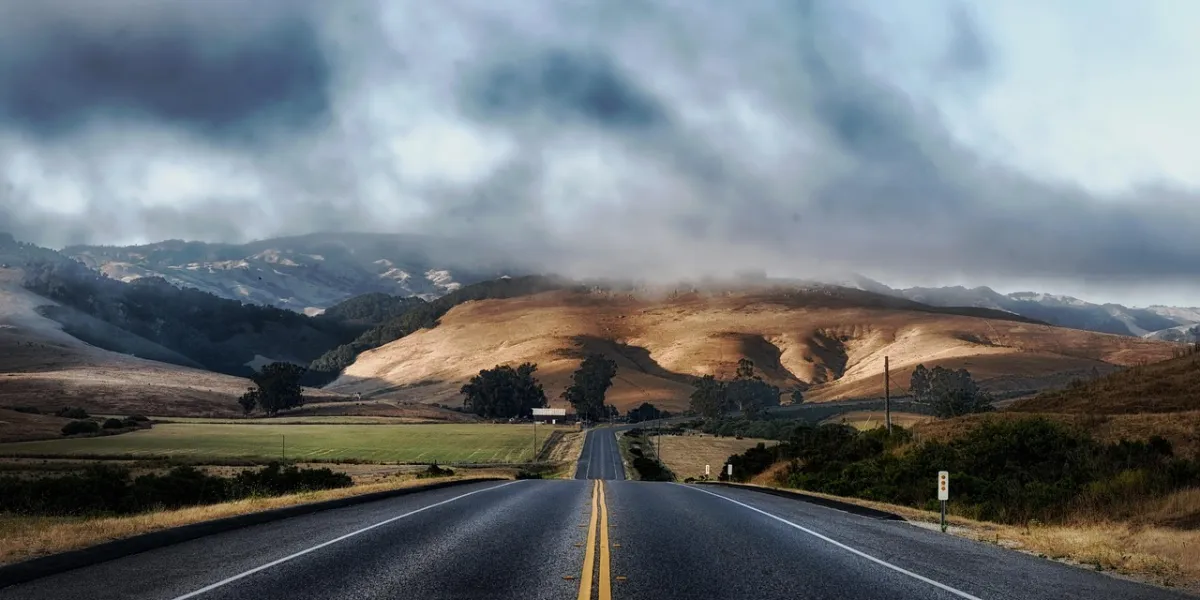
Renting a motorcycle in California means linking, on a single trip, Highway 1 above the Pacific, the bends of the Malibu canyons, the passes of the Sierra Nevada and the long straight roads of the desert. Our partner EagleRider welcomes you at four locations, in Los Angeles, San Francisco, San Diego and Palm Springs, with Harley-Davidson, BMW, Indian, Triumph and Yamaha motorcycles, trikes and an electric model, subject to availability.
Each city opens up its own terrain: the coast and the Sierra from San Francisco, the canyons and Angeles Crest from Los Angeles, the Julian backcountry and the Anza-Borrego desert from San Diego, Joshua Tree and Death Valley from Palm Springs. Nights are spent in hotels, motels or lodges, and helmets are compulsory for everyone in the state.
Where to pick up your motorbike in California?
Choose your departure city: the map shows where rental companies hand over their motorbikes.
The best itineraries in California
1 Highway 1, from San Francisco to Los Angeles
- San Francisco
- Santa Cruz
- Monterey
- Carmel
- Big Sur
- San Simeon
- Santa Barbara
- Malibu
- Los Angeles
The coast road leaves San Francisco via Santa Cruz and Monterey Bay, then clings to the cliffs of Big Sur between Carmel and San Simeon: tight bends, bridges over coves and viewpoints every few kilometres. Further south it opens out towards Santa Barbara and runs along the beaches of Malibu to Los Angeles. Riding north to south keeps you on the ocean side.
Landslides regularly close sections of Big Sur, sometimes for several months: check the road status before you set off and plan an inland detour if needed. Returning the motorcycle in Los Angeles means a one-way rental, sometimes possible depending on dates; otherwise, head back to San Francisco on the faster Highway 101.
- Distance
- about 750 km (470 miles)
- Recommended vehicle
- Touring bike (Street Glide, Road Glide, R 1250 RT)
2 Malibu canyons and the Angeles Crest Highway
- Los Angeles
- Malibu
- Mulholland Highway
- Pasadena
- Angeles Crest Highway
- Wrightwood
- Los Angeles
Two of the favourite playgrounds of Los Angeles riders, within easy reach of the location. To the west, the roads of the Santa Monica Mountains, including Mulholland Highway, wind between the Malibu coast and the hills, with linked bends and Pacific views. To the north-east, the Angeles Crest Highway climbs from La Cañada Flintridge into the San Gabriel Mountains and tops 2,000 m before dropping towards Wrightwood.
These roads are narrow and busy at weekends: set off early and leave a margin in blind bends. Sections of the Angeles Crest sometimes close in winter because of snow or after rockfalls: check their status before you go.
- Distance
- about 400 km
- Recommended vehicle
- Roadster or adventure bike (MT-07, Tracer 900, R 1250 GS)
3 Yosemite, Tioga Pass, Lake Tahoe and Napa
- San Francisco
- Yosemite
- Tioga Pass
- Mono Lake
- Lake Tahoe
- Napa
- San Francisco
From San Francisco, the big Sierra Nevada loop: Yosemite Valley and its granite walls, then Tioga Road across the park's high country and over Tioga Pass, above 3,000 m, before plunging down to Mono Lake. You then head north to Lake Tahoe and come back down through the Napa vineyards. Add a day on the north coast, via Point Reyes and Bodega Bay, to finish on Highway 1.
Tioga Pass only opens in the warmer months, generally from late May or June to November depending on snow. At altitude, mornings stay cool even in summer: pack a warm layer. Book hotels and lodges around Yosemite early.
- Distance
- about 950 km
- Recommended vehicle
- Adventure or touring bike (R 1250 GS, Pan America, Road Glide)
4 Joshua Tree and Death Valley, from Palm Springs to Las Vegas
- Palm Springs
- Joshua Tree
- Twentynine Palms
- Baker
- Death Valley
- Las Vegas
Starting from Palm Springs, Joshua Tree National Park unrolls its roads among Joshua trees and granite boulders. The route then heads north across the Mojave Desert, on long straights with few gas stations, to Death Valley, its dunes and the Badwater Basin, the lowest point in North America. Las Vegas, where EagleRider also has a location, is a few hours away.
Ride this route from November to March: in summer, the heat in Death Valley is dangerous on a motorcycle. Ending in Las Vegas means a one-way rental, sometimes possible depending on dates; otherwise, head back to Palm Springs or Los Angeles. Fill up at every opportunity.
- Distance
- about 700 km
- Recommended vehicle
- Cruiser or touring bike (Heritage Softail, Street Glide)
When to go in California?
Spring and autumn
The best months to combine coast, mountains and canyons. The coast stays mild, the Sierra clears of snow from late May or June, and autumn brings quieter roads after the summer. The desert heats up fast: in Palm Springs the average high reaches 38.8 °C in June, so keep it for April or late October. On the coast, the morning mist of May and June often lifts in the afternoon.
July and August
High season: busy roads to Yosemite and on Highway 1, full hotels on the coast and near the parks. This is the right time for the Sierra Nevada, Tioga Pass and Lake Tahoe. In San Francisco, summer fog keeps highs around 19 °C, while Palm Springs averages over 40 °C: avoid the desert. From summer into autumn, wildfires can close roads.
November to March
Desert season: Palm Springs, Joshua Tree and Death Valley can be ridden under gentle sunshine, with cool nights. The southern coast stays pleasant between rain spells, but this is when San Francisco gets most of its rain (133 mm in December). In the Sierra Nevada, snow closes Tioga Pass and some of the high roads.
Renting in California, step by step
-
1
Choose your departure city
EagleRider has four locations in California: Los Angeles (11860 S La Cienega Blvd, 90250 Hawthorne), San Francisco (1635 Valencia St, 94110 San Francisco), San Diego (at San Diego Harley-Davidson, 4645 Morena Blvd, 92117 San Diego) and Palm Springs (19465 N. Indian Canyon Dr., 92258 Palm Springs). Pick the one closest to the roads you want to ride first.
-
2
Choose your motorcycle
A Harley-Davidson or BMW RT tourer for Highway 1 two-up, a BMW GS or Harley-Davidson Pan America adventure bike for the Sierra, a Yamaha or Triumph roadster for the canyons, a Tri Glide trike or Polaris Slingshot to ride without worrying about balance. Models are offered subject to availability and are never guaranteed at a given location.
-
3
Book
Run a search for your dates: it shows the available motorcycles, the conditions of the offer (minimum age, years holding a licence, mileage) and whether a one-way rental to another location is possible. Book early for the summer and for the most popular models.
-
4
Ride off
Go to the location with your motorcycle licence, an international driving permit if your country requires one and the documents listed in the offer. The team walks you through the motorcycle: take time to adjust the mirrors and controls, then ride a few quiet kilometres before joining the freeway.
Everything to know before hitting the road
Helmets for all and lane splitting
In California, helmets are compulsory for everyone, rider and passenger alike. Lane splitting between cars is legal: do it at moderate speed, when traffic is slow, and watch for vehicles changing lanes. Bring your own helmet or check with the location before departure.
Big Sur, landslides and wildfires
Before riding Highway 1 through Big Sur or the Angeles Crest, check road conditions on the website of Caltrans, the California transportation department: landslides regularly close sections there. From summer into autumn, wildfires also cause closures. Keep a spare day in your itinerary.
Heat and fuel in the desert
Between Joshua Tree and Death Valley, gas stations are far apart and there is often no mobile signal. Fill up at every opportunity, carry water and ride in the morning. In summer, the heat makes these roads dangerous on a motorcycle: save the desert for winter.
Layers for the coast and the mountains
In a single day you can go from the cool mist of San Francisco to over 30 °C inland, then to the cold of a Sierra pass. Bring layered gear, a warm liner and rain protection in winter. Touring bike panniers have limited space: travel with a soft bag.
Book hotels near the parks early
Hotels and lodges around Yosemite and in Big Sur are few and fill up fast in summer. Book your nights ahead, and the motorcycle at the same time to get the model you want on your dates.
Your questions about a road trip in California
Is Highway 1 open through Big Sur?
Not always. Landslides regularly cut the road between Carmel and San Simeon, sometimes for months. You can then often ride up to the closure from the north or the south, and detour via Highway 101. Check the road status on the Caltrans website just before you set off.
Can you ride through Death Valley in summer?
It is not recommended. In Palm Springs, average highs already exceed 40 °C in July and August, and Death Valley is hotter still. On a motorcycle, exposure to the heat and the scarcity of gas stations make the crossing risky. Keep this area for November to March.
When is Tioga Pass open?
Generally from late May or June to November, depending on the year's snowfall. The rest of the time, Yosemite remains accessible from the west, but you cannot cross the Sierra to Mono Lake through the park. The opening date varies from year to year: check it with the park before planning your route.
Is lane splitting allowed?
Yes, California allows lane splitting between cars, which saves time in the traffic jams of Los Angeles and the San Francisco Bay Area. Nothing obliges you to do it: only do so if you feel comfortable, with a small speed difference from the traffic.
Can you end your trip in Las Vegas?
EagleRider has a location in Las Vegas, Nevada. Returning the motorcycle to a location other than the departure one is sometimes possible: it is up to the rental company and varies with dates. A search for your dates will show it. Otherwise, a loop brings you back to your departure location.
FAQ — Motorcycle rental in California
What licence do I need to rent a motorcycle in California?
A valid motorcycle licence, category A for a European licence. An international driving permit may be required depending on the country that issued your licence. Minimum age and years holding a licence depend on the rental company and the motorcycle: see the conditions of the offer.
Are helmets compulsory?
Yes, for everyone in California: rider and passenger, whatever their age. If your route leaves the state, towards Las Vegas for example, keep wearing it: it is the best protection in any case.
Can I ride two-up?
Yes, on touring motorcycles such as the Street Glide, Road Glide, Electra Glide Ultra or R 1250 RT, which have a proper passenger seat and panniers. The passenger must wear a helmet too. For a long trip for two, choose a tourer rather than a roadster.
How do I carry my luggage?
Touring bikes have side panniers, sometimes a top case, but space is limited. Travel with soft bags rather than a hard suitcase, and ask the location what it offers for your belongings during the trip.
Can I return the motorcycle in another city?
A one-way rental, for example from San Francisco to Los Angeles or from Palm Springs to Las Vegas, is sometimes possible. It is up to the rental company and varies with dates: a search for your dates will show it.
When should I book?
For July and August, book several months ahead, especially for touring motorcycles and trikes. Out of season, a few weeks is often enough, but booking early remains the best way to get the model you want.
Why ride a motorcycle in California
Few regions bring together so many different roads: Highway 1 hanging above the ocean, the twisting canyons above Malibu, the passes of the Sierra Nevada and the straight lines of the Mojave Desert. On a motorcycle you feel the climate change from one valley to the next, from the cool coast to the dry desert air, and you choose your stops as the landscapes unfold.
California also lends itself to independent travel: a dense network of hotels, motels and lodges, traffic in which lane splitting is allowed, and EagleRider locations in four departure cities. Whether it is a weekend in the canyons or three weeks from the coast to the parks, every plan finds its motorcycle and its season.